HyperTools 2.0: modernized toolbox, interactive backend, soft clustering, comprehensive visual verification#270
HyperTools 2.0: modernized toolbox, interactive backend, soft clustering, comprehensive visual verification#270jeremymanning wants to merge 48 commits into
Conversation


Co-Authored-By: Claude Fable 5 <noreply@anthropic.com>
Co-Authored-By: Claude Fable 5 <noreply@anthropic.com>
…audit

Co-Authored-By: Claude Fable 5 <noreply@anthropic.com>
…erator, dev notebook

- scripts/screenshot_harness.py: headless PNG capture per function/use-case
- scripts/generate_baseline_screenshots.py: 13 baseline cases, all passing on v0.8.2
- dev/hypertools_2.0_dev.ipynb: interactive test matrix, one section per public function
- Roadmap updated with design decisions mined from fork issue tracker (incl. comments)
- tests/screenshots/ gitignored (reviewed locally / CI artifacts, not committed)

Co-Authored-By: Claude Fable 5 <noreply@anthropic.com>
…mixture models to first-class 2.0 features; record approved backend='auto' policy

Co-Authored-By: Claude Fable 5 <noreply@anthropic.com>
…models, robust coloring

Co-Authored-By: Claude Fable 5 <noreply@anthropic.com>
Co-Authored-By: Claude Fable 5 <noreply@anthropic.com>
…lazy heavy imports

- Migrate to PEP 621 pyproject.toml (v2.0.0.dev0, py3.10+); delete setup.py,
  requirements.txt, MANIFEST.in, stale .travis.yml
- CI: py3.10-3.13 matrix, setup-python@v5, cache@v4, codecov@v4, screenshot
  artifact upload; readthedocs python 3.9->3.11
- Remove memoize entirely (user requirement): str()-keyed cache truncated
  numpy arrays -> cache collisions returned wrong results (fork issue #3)
- Lazy-import umap, seaborn, scipy.interpolate: import hypertools 5.1s -> 1.46s
- 136/136 tests pass

Co-Authored-By: Claude Fable 5 <noreply@anthropic.com>
…re-formatting, scope plot styling (fixes #259)

- Replace external hdbscan package with sklearn.cluster.HDBSCAN (always
  available); drop the SyntaxWarning filter that existed only for it
- plot(): pass format_data=False to the post-analyze reduction (data was
  already formatted; avoids a redundant format_data/PPCA pass per plot)
- plot(): apply seaborn palette/style inside plt.rc_context() so plotting no
  longer permanently mutates matplotlib rcParams (GH #259) - verified with a
  real before/after rcParams diff
- 136/136 tests pass

Co-Authored-By: Claude Fable 5 <noreply@anthropic.com>
…lors)

- cluster() supports GaussianMixture, BayesianGaussianMixture, LDA, NMF and
  returns (n_samples, n_components) membership proportions (rows sum to 1);
  hard-clustering behavior unchanged
- New hypertools/tools/colors.py: mat2colors maps categorical labels,
  continuous 1D values, or 2D matrices (soft assignments / arbitrary numeric
  matrices) to RGB; colors2groups quantizes per-point colors into traces for
  the matplotlib renderer
- plot() accepts cluster='GaussianMixture' etc. (points colored by
  proportion-weighted blends) and matrix-valued hue
- 145/145 tests pass (9 new: real GaussianMixture/BGM/LDA/NMF calls,
  color-blend math, end-to-end mixture plot)

Co-Authored-By: Claude Fable 5 <noreply@anthropic.com>
- plot([[a, b], [c]]) flattens arbitrarily nested dataset lists, coloring
  every leaf by its outermost group and rendering deeper leaves thinner and
  fainter (summary -> detail, per fork design issues #14/#16)
- Nested string lists (text corpora) are explicitly excluded and keep their
  existing text-pipeline behavior
- 156/156 tests pass (6 new, incl. rendered-line color/width assertions)

Co-Authored-By: Claude Fable 5 <noreply@anthropic.com>
- New hypertools/plot/interactive.py: plotly renderer mirroring _draw's
  contract (2D/3D traces, fmt-string mode mapping, per-trace colors/labels,
  hypertools no-ticks aesthetic, matplotlib elev/azim -> plotly camera)
- Animations: sliding-window frames (animate=True) and camera spin
  (animate='spin') with play/pause controls
- hyp.plot(..., backend='auto'|'matplotlib'|'plotly'): auto uses plotly ONLY
  on Colab/Kaggle (approved policy); matplotlib default everywhere else
- Screenshot harness exports plotly figures via kaleido
- 169/169 tests pass (13 new: policy resolution incl. Colab/Kaggle markers,
  fmt mapping, camera math, end-to-end plotly figure/animation assertions)

Co-Authored-By: Claude Fable 5 <noreply@anthropic.com>
…ok, backend fix, README 2.0 docs

- scripts/generate_verification_screenshots.py: 44/44 cases pass covering
  every public function (plot/reduce/align/normalize/cluster/analyze/
  describe/format_data/load/text) on both backends; INDEX.md manifest;
  curated copy committed to docs/images/v2.0-verification/ for PR evidence
- dev notebook executed end-to-end with 0 errors via nbclient
  (dev/hypertools_2.0_dev_executed.ipynb); notebook cells updated to
  exercise implemented 2.0 APIs
- backend.py: catch ValueError from mpl.use() -- matplotlib >=3.9 raises it
  (not ImportError) for missing ipympl; likely root cause of Colab
  animate=True failures (#235)
- README: What's new in 2.0 + modernized requirements; ipykernel in [dev]
- Full suite re-verified: 169/169 tests, 13/13 baselines, import 1.5-1.7s

Co-Authored-By: Claude Fable 5 <noreply@anthropic.com>
Co-Authored-By: Claude Fable 5 <noreply@anthropic.com>
Co-Authored-By: Claude Fable 5 <noreply@anthropic.com>
Co-Authored-By: Claude Fable 5 <noreply@anthropic.com>
… time

GitHub's windows/py3.13 runners ship a broken Tcl/Tk: TkAgg imports fine
(so backend probing selects it) but window creation raises _tkinter.TclError.
manage_backend now retries the plot once on the original backend after an
interactive-backend TclError instead of crashing.

Co-Authored-By: Claude Fable 5 <noreply@anthropic.com>
Co-Authored-By: Claude Fable 5 <noreply@anthropic.com>
- plotly renderer now reproduces the matplotlib aesthetic exactly: black
  wireframe cube (3D) / square frame (2D), hidden axes, unit-cube range,
  matched camera (elev/azim), pt->px line/marker sizing, full fmt-string
  support (marker symbols + dash styles, with 3D symbol fallbacks)
- MULTICOLORED LINES: continuous or matrix hue + line fmt colors each
  trajectory continuously along its length (matplotlib Line3DCollection /
  LineCollection; plotly per-point line colors in 3D, segment traces in 2D)
- Fix long-standing is_line() bug: '' in Line2D.markers made it return
  False for every fmt string, silently disabling line interpolation on
  modern matplotlib; also parse linestyles before marker chars ('-.')
- Re-mapped per-point labels onto interpolated trajectories (fixes latent
  IndexError that interpolation re-enablement exposed)
- Parity montage generator (scripts/generate_parity_screenshots.py):
  matplotlib|plotly side-by-side for 22 identical calls
- 173/173 tests pass

Co-Authored-By: Claude Fable 5 <noreply@anthropic.com>
- Removed (previously deprecated, now retired for 2.0): plot's group/model/
  model_params; reduce's model/model_params/normalize/align; align's
  method/normalize/ndims and the ambiguous align=True form (now a clear
  ValueError with migration hint); cluster's ndims
- DataGeometry.plot translates/drops retired kwargs when replaying geos
  saved by hypertools < 2.0 (group -> hue), so old files still load
- New hyp.apply_model: the stack/unstack core from the revamp design --
  one model fit across stacked datasets then unstacked to input structure
  (stack=False for per-dataset fits); model specs as registry name / dict /
  sklearn instance / pipeline list; mode auto|fit_transform|fit_predict|
  predict_proba; return_model for reuse on held-out data; explicit
  whitelist registry (no eval)
- 185/185 tests pass (12 new apply_model tests)

Co-Authored-By: Claude Fable 5 <noreply@anthropic.com>
…s for all 2.0 features

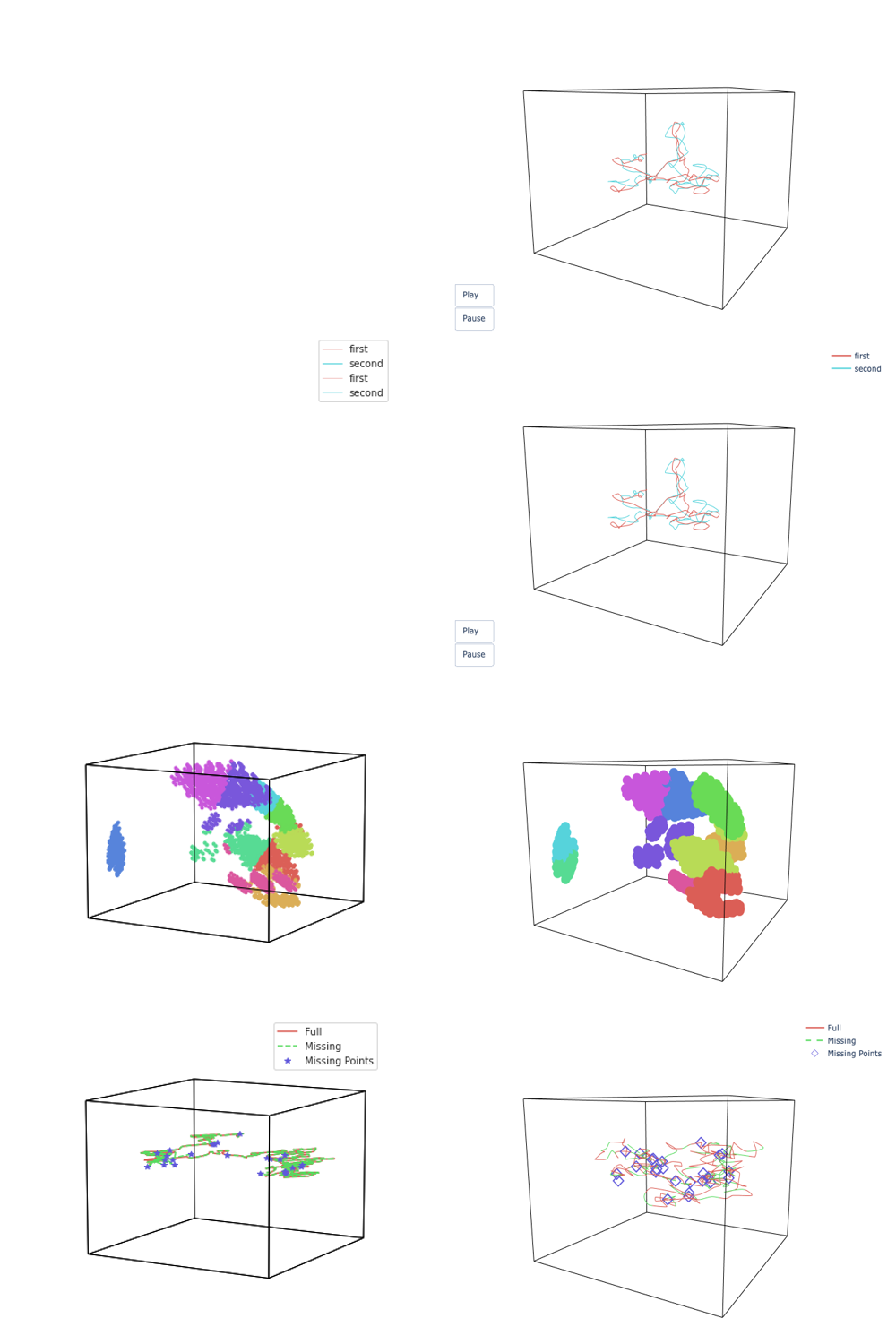
- docs/images/v2.0-parity/: 22 side-by-side (matplotlib | plotly) montages
  of identical calls -- line/marker styles, dashes, sizing, colors, hue
  variants, clustering, mixtures, nested lists, multicolored lines
- docs/images/v2.0-verification/: refreshed 75-case matrix (was 44) now
  covering every plotting feature on BOTH backends, incl. multicolored
  lines, mixture models, nested lists, marker/line styles, animations,
  and apply_model
- 5 new gallery examples (interactive backend, mixture models,
  multicolored lines, nested lists, apply_model), all executing cleanly;
  gallery rebuilt; apply_model added to the API reference
- dev notebook updated for all implemented 2.0 features and re-executed
  end-to-end with 0 errors
- README documents multicolored lines, apply_model, backend parity, and
  the retired legacy arguments
- 185/185 tests pass; import 1.41s

Co-Authored-By: Claude Fable 5 <noreply@anthropic.com>

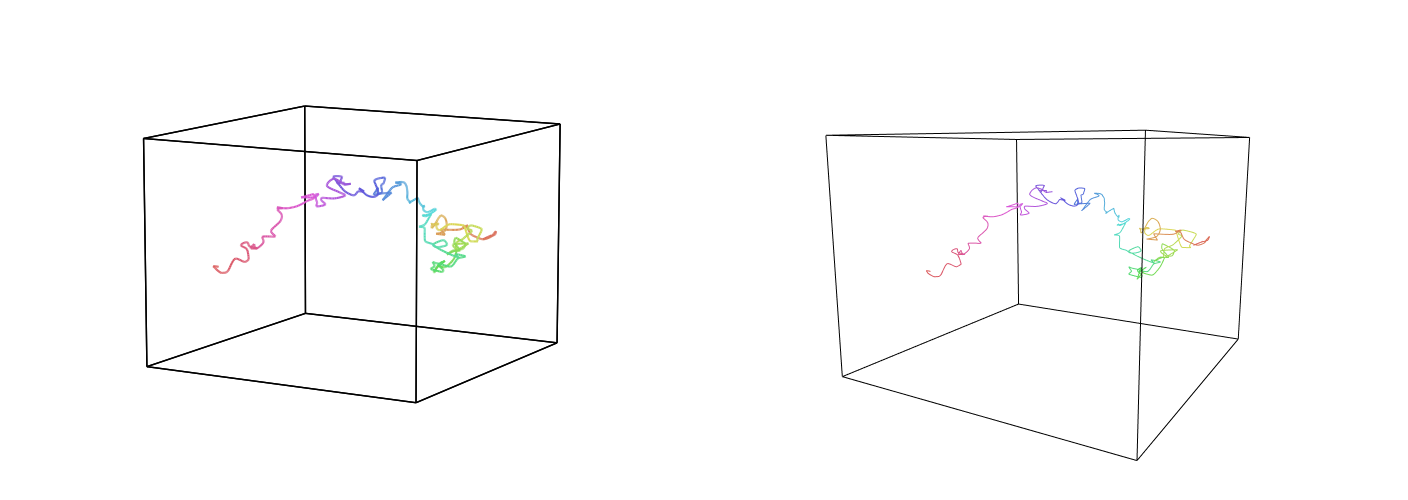
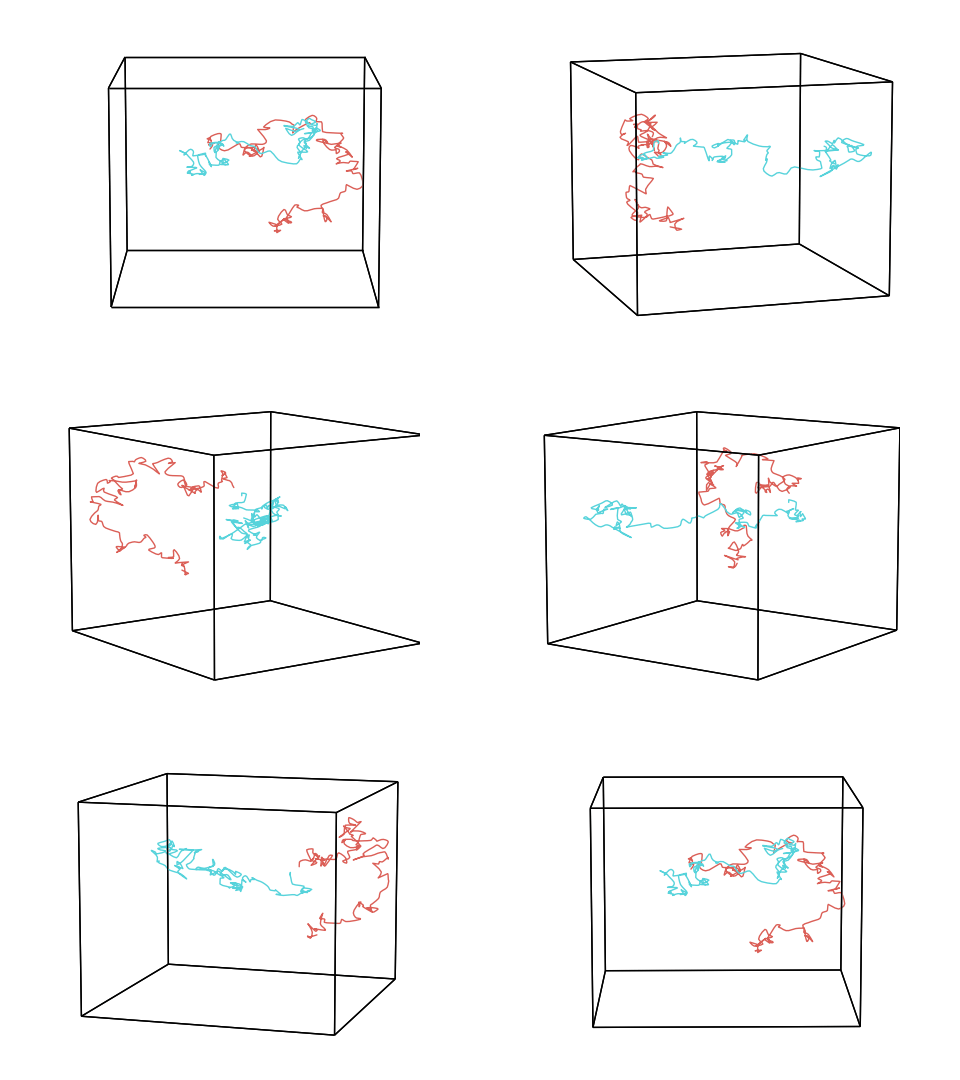
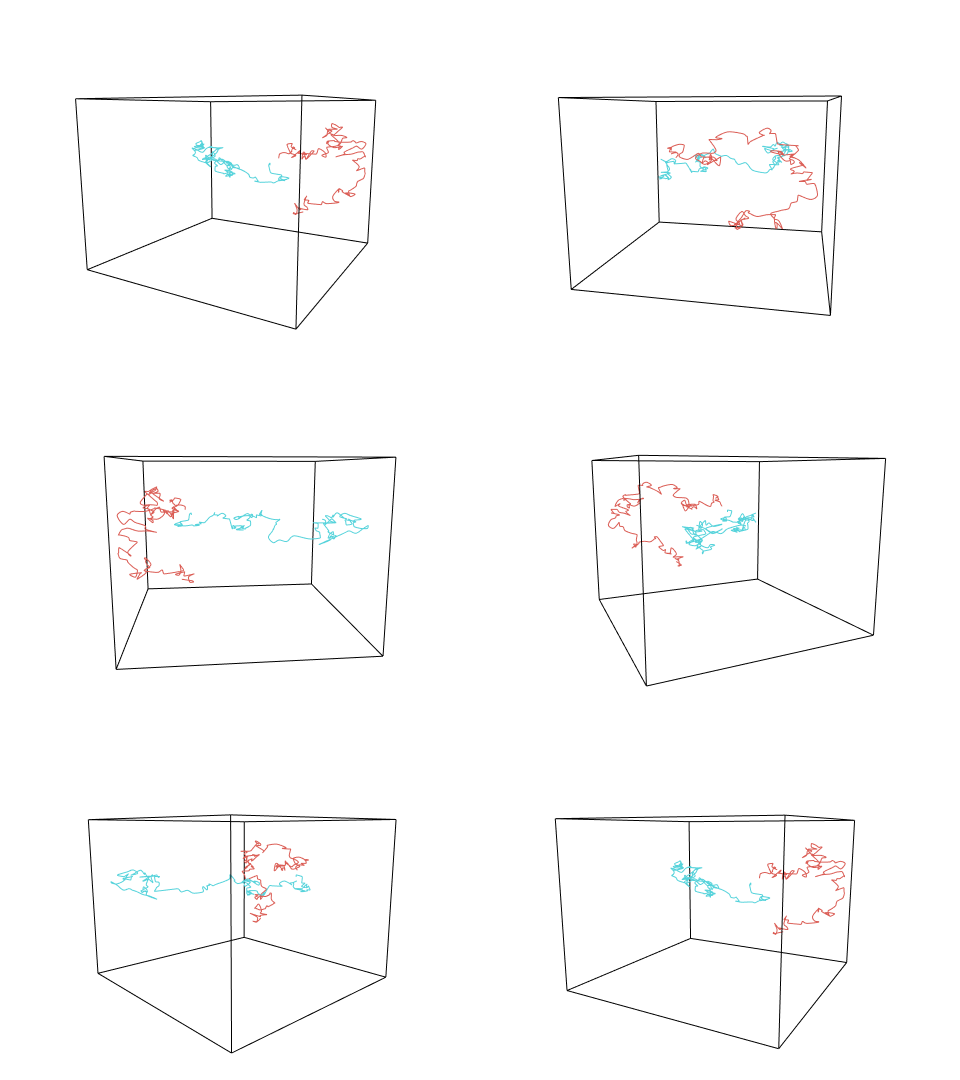
All review items addressed ✅Every item from the review is now implemented, tested, and screenshotted (PR body updated with full details). Summary of what changed since the initial submission: 1. Backend visual parityThe plotly renderer was rewritten to reproduce the matplotlib output exactly: same wireframe cube / square framing, hidden axes, matched camera (elev/azim), pt→px-calibrated line widths and marker sizes, full format-string support (marker symbols + dash styles), and identical palette assignment. Evidence: 22 side-by-side montages (matplotlib left | plotly right, same call) in Multicolored line, same call on both backends:
2. Complete feature screenshot coverageThe verification matrix grew from 44 → 75 cases, all passing (manifest): clustering (hard + all four mixture models), multilevel/nested lists, multicolored lines (new feature — continuous per-segment coloring along trajectories, both backends), matrix/continuous/categorical hue, marker + line styles, animations, 3. Formerly deferred items — all now in this PR
Bonus fix found while restoring parity
Final numbers: 185 tests passing · 75/75 verification cases · 22/22 parity montages · dev notebook executes with 0 errors · docs build clean · CI matrix green. 🤖 Generated with Claude Code |
Co-Authored-By: Claude Fable 5 <noreply@anthropic.com>
…ments, plotly gallery

- Animation EXPORT on both backends, format by extension: .gif (Pillow),
  .png/.apng (animated PNG), .mp4/.mov/.avi (ffmpeg). plotly animations
  render each frame via kaleido then assemble; exported frames no longer
  include the play/pause controls; frame counts scale with duration.
  7 new tests save real files and verify frame counts. Sample GIFs from
  BOTH backends committed to docs/images/v2.0-animations/.
- Mixture demos now use OVERLAPPING clusters (1.5 sd apart) so multi-class
  membership is visible as blended colors (examples, screenshots, parity,
  notebook); new test asserts a substantial fraction of genuinely mixed
  assignments.
- Backend parity refinements: centered black 12pt title (matching
  matplotlib), default 640x480 canvas, 2D frame fills the canvas like
  matplotlib (no forced square), 3D box uses matplotlib's 4:4:3 aspect,
  camera distance tuned so cube sizes match (r=1.95).
- Sphinx gallery renders plotly figures (plotly_sg_scraper + kaleido);
  new animate_plotly example with an animated GIF thumbnail wired into
  post_build; interactive-backend example shows the plotly figure inline.
- Dev notebook displays animations inline (to_jshtml + plotly frames) and
  demonstrates gif export; re-executed end-to-end with 0 errors.
- Evidence regenerated: 22/22 parity montages, 75/75 verification cases.
- 192/192 tests pass (185 + 7 animation-export)

Co-Authored-By: Claude Fable 5 <noreply@anthropic.com>
Co-Authored-By: Claude Fable 5 <noreply@anthropic.com>
Root cause of the macos/py3.11 CI failure: Google Drive answered a dataset
request with an HTML rate-limit page (200 status), which load() cached as
the dataset -- poisoning every subsequent text-data test on that runner
with UnpicklingError.

- _download_example_data: raise_for_status; detect HTML error pages before
  caching (all example datasets are pickles, which never start with '<')
- _load_example_data: on a corrupt cache, delete it and retry the download
  once before failing; never leave a poisoned cache behind
- Regression test poisons the real cache with the actual Drive error page
  and verifies recovery (or clean failure with the cache removed)

Co-Authored-By: Claude Fable 5 <noreply@anthropic.com>
… CI jobs

- _download_example_data retries up to 4 times (2s/6s/18s backoff) when the
  host rate-limits, instead of failing on the first error page
- CI caches ~/hypertools_data (immutable datasets, one cross-OS entry) so
  24 concurrent jobs stop re-downloading the same files from Google Drive
  every run -- the root cause of the intermittent text-test failures

Co-Authored-By: Claude Fable 5 <noreply@anthropic.com>
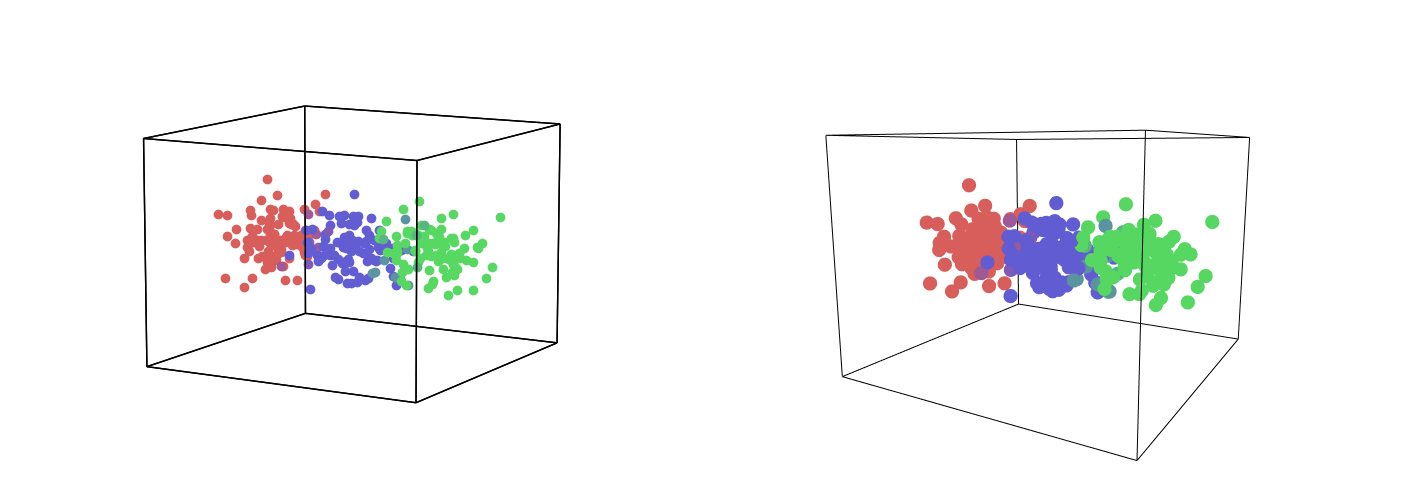
Round-2 review items addressed ✅1. Mixture demos now show true multi-class membershipAll mixture-model demos (examples, screenshots, parity montages, dev notebook) use overlapping clusters (1.5 sd apart), so points in the overlap regions have genuinely mixed memberships and render with blended, intermediate colors. A new test asserts that a substantial fraction of points have soft (< 0.9 max-proportion) assignments.
2. Axis sizing/ratio and title placement now match
All 22 parity montages regenerated: 3. Animation works and exports to gif / animated png / mp4 — both backends
The dev notebook now displays animations inline ( 4. Sphinx gallery renders plotly output (including animation)
Bonus: dataset-download hardening (found via a CI failure during this round)One macOS CI job failed because Google Drive rate-limited a dataset download and returned an HTML error page with a 200 status, which Updated numbers: 193 tests passing · 75/75 verification cases · 22/22 parity montages · 4 committed animation exports · docs + gallery build clean · CI green. 🤖 Generated with Claude Code |
Co-Authored-By: Claude Fable 5 <noreply@anthropic.com>
…multi-panel + cache verification

- SVG export on both backends: static (.svg) plus ANIMATED vector SVG via
  SMIL (frames stitched with discrete display switching; verified frame
  advance in headless Chrome by scrubbing setCurrentTime). matplotlib
  frames captured through a public AbstractMovieWriter subclass with
  frame subsampling (<=60 frames)
- plotly window animations now rotate the camera while the window
  advances, matching matplotlib's behavior
- plotly titles centered over the plot area (xref='paper') with a
  matplotlib-matched font stack
- hyperalign: n_iter argument (default 10) iteratively re-estimates the
  common template; dict form no longer returns None; removed leftover
  'method' reference that raised NameError for unknown align strings
- shapes zoo: bunny/cube/dragon/sphere/teapot/vase/biplane + datasaurus
  registered with their Dropbox sources (direct-URL download support in
  the loader; tolerant unpickler for dill/legacy-pandas formats; dill
  added as a dependency). 'egyption_mask' excluded: upstream file is an
  empty (0,3) array
- Multi-panel figures verified (hyp.plot(..., ax=...) into user subplot
  grids, 3D + 2D panels)
- Re-download hygiene verified: repeated loads leave the cache byte-stable
  (no duplication / storage leak)
- Reconstructed the classic readthedocs hyperaligned-weights animation
  (docs/images/v2.0-animations/weights_hyperaligned.gif)
- 9 new tests (tests/test_round3.py), all real calls

Co-Authored-By: Claude Fable 5 <noreply@anthropic.com>
… regen

- Docs: modern pydata-sphinx-theme (replacing sphinx_bootstrap_theme);
  full site + gallery build verified, screenshots committed to
  docs/images/v2.0-theme/. nbsphinx_execute='never': tutorial notebooks
  ship pre-executed, and 'auto' was re-executing every gallery notebook
  (doubling build time and hanging on plotly exports in the nbsphinx
  kernel)
- Fixed zoom: Axes3D.dist was removed in matplotlib >= 3.8, silently
  disabling animation zoom; replaced with set_box_aspect(zoom=...) using
  the exact legacy scale mapping (10 / (9 - zoom))
- Reconstructed the classic readthedocs hyperaligned-weights animation
  (docs/images/v2.0-animations/weights_hyperaligned.gif): 36 subjects,
  align='hyper', smooth interpolated trajectories, working zoom
- Modern demos: gallery examples plot_shapes_zoo + plot_datasaurus;
  executed tutorial notebooks hugging_face_embeddings (sentence-
  transformers + HF ag_news, mixture soft clustering, UMAP, animated spin
  gif) and modern_sklearn_dynamics (HDBSCAN, GaussianMixture, Lorenz
  attractor multicolored line, animated gif); registered in the tutorials
  toctree
- Animation evidence regenerated with the rotation + zoom fixes; parity
  montages regenerated (22/22) with the title-font change
- 202/202 tests pass

Co-Authored-By: Claude Fable 5 <noreply@anthropic.com>
Co-Authored-By: Claude Fable 5 <noreply@anthropic.com>
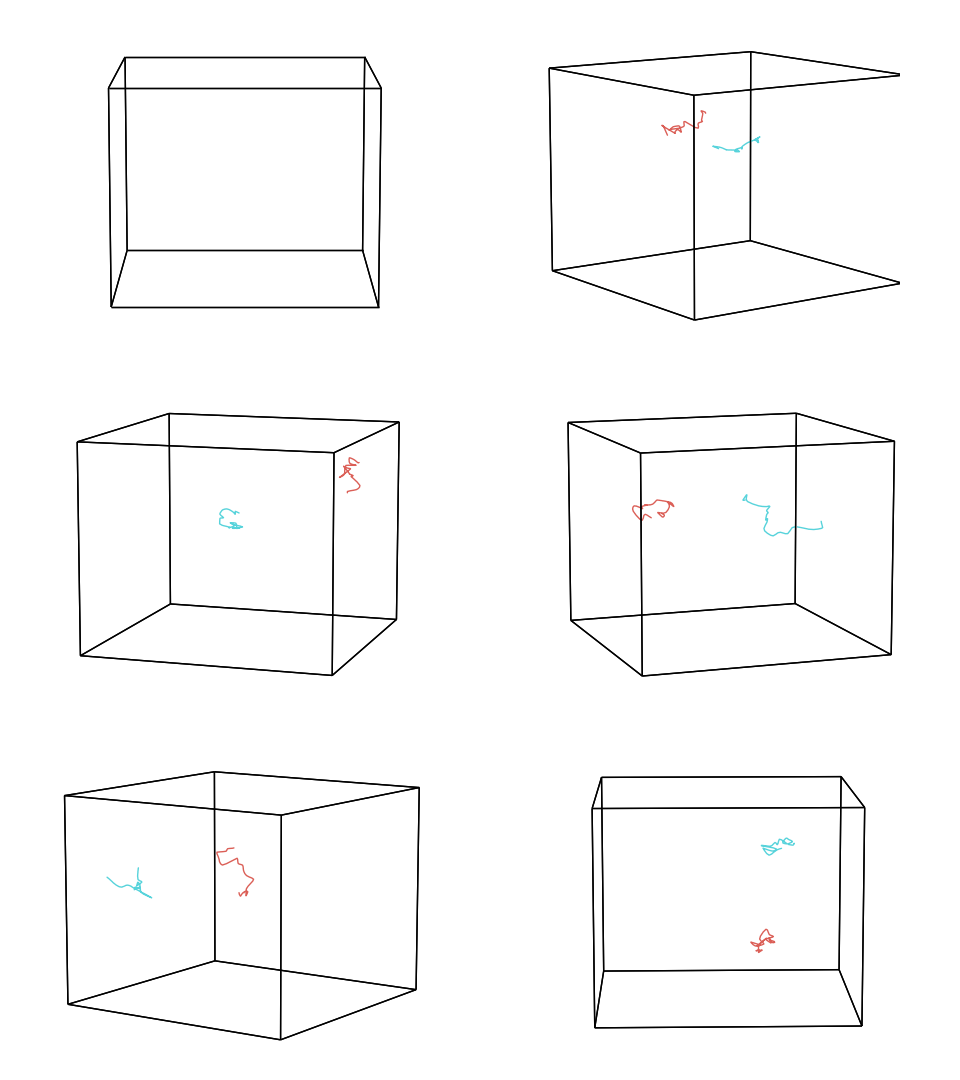
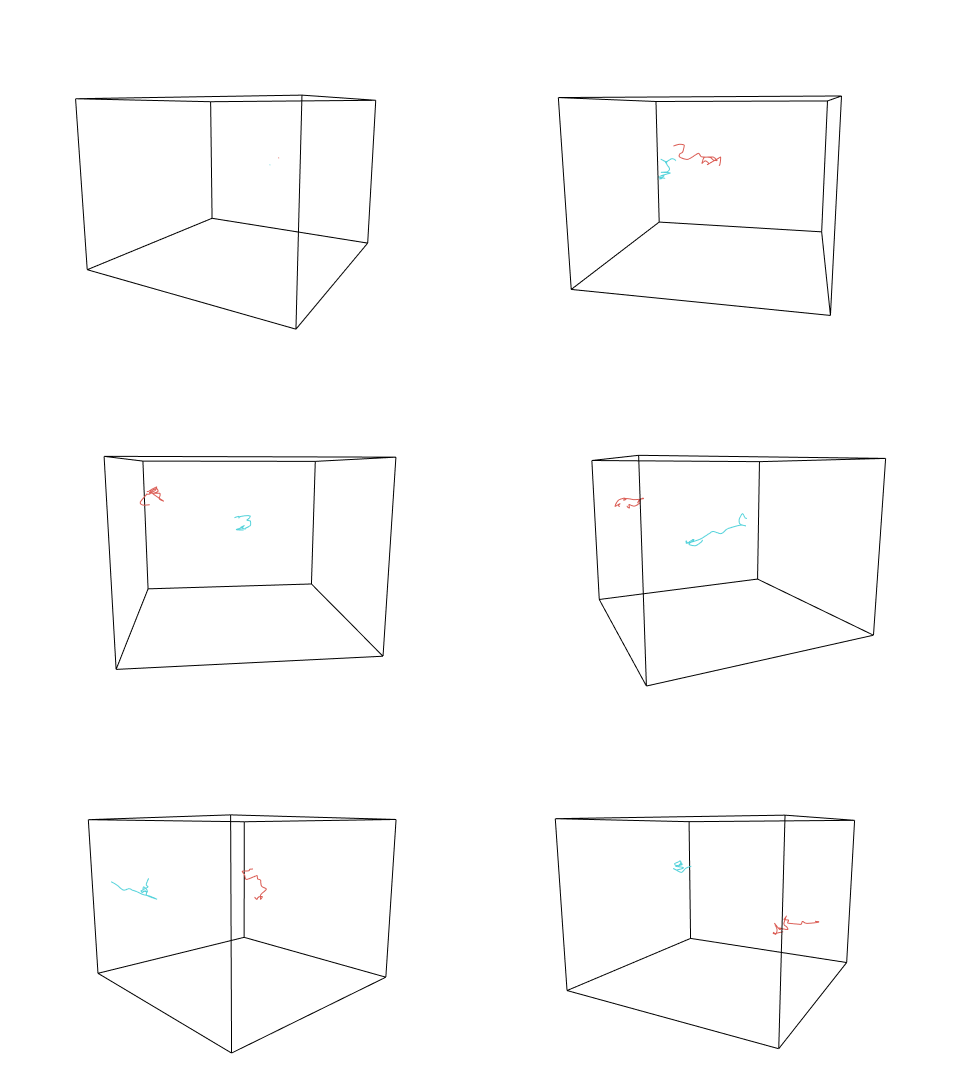
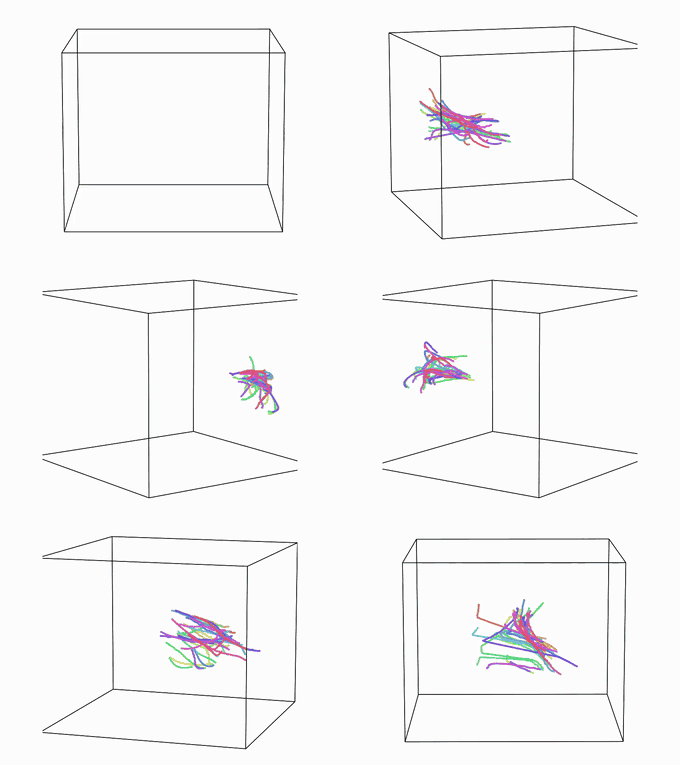
Round-3 review items — all 10 addressed ✅1. SVG export: static AND animated, both backends
2. plotly window animation now rotates
3. Titles matchplotly titles are centered over the plot area ( 4. Multi-panel figures verified
5. Hyperalignment
|
Co-Authored-By: Claude Fable 5 <noreply@anthropic.com>
…ality fixes, embedding demos

- hyperalign now REPEATEDLY applies the full procedure (n_iter passes,
  default 10): each pass's aligned output feeds the next, compounding
  convergence (mean distance to group mean 0.43 -> 0.004 over 10 passes
  on rotated copies). The classic readthedocs weights animation is
  regenerated with the corrected pipeline (normalize='across',
  align='hyper', zoom=3.5, rotations=1, frame_rate=50, linewidth=3)
- NEW animate='serial' mode (both backends): datasets appear one at a
  time in list order, each growing point-by-point while earlier ones stay
  fixed, never connected -- built for conversation-turn visualizations;
  tests assert sequential reveal on both backends
- Animation quality: full-canvas animated axes + skip tight_layout fixes
  cube/data clipping at rotation angles (border-pixel regression test);
  linewidth is now a plot() argument and animations no longer hardcode
  linewidth=1; markersize is now a plot() argument
- EXACT per-point colors for markers: matrix hue / mixture-model scatter
  renders true per-observation blends via scatter (was: quantized color
  groups); plotly path already carried per-point colors
- Shapes morph: 3510 frames @ 30fps (117s, 13 rotations), committed as
  mp4 + 20s preview gif
- Demos: wikipedia embeddings (BAAI/bge-small-en-v1.5 + UMAP + 10-way
  GaussianMixture soft clustering, markersize=2) and reddit conversation
  trajectories (convokit reddit-small, sliding-window SBERT, per-speaker
  colors, animate='serial', 30s/3 rotations) -- both executed 0 errors
  with committed gifs
- 205 tests passing

Co-Authored-By: Claude Fable 5 <noreply@anthropic.com>
…tax, 30fps standard, rebuilt demos

WEIGHTS (the classic readthedocs animation) — fully diagnosed via Jeremy's
2020 pieman_trajectory_demo notebook (hypertools 0.6.2 + timecorr):
  gaussian temporal smoothing (var=300) -> hyp.align repeated n_iter=20
  (SRM) -> smooth again -> UMAP -> animate
Two additional findings were required to reproduce it on modern deps:
- align('SRM') now supports n_iter (re-fits SRM on each pass's output;
  inter-subject correlation plateaus ~0.87 = the data's shared-signal
  ceiling, matching era behavior since the vendored SRM is unchanged
  since v0.6.2)
- modern umap-learn's default n_neighbors=15 keeps neighborhoods
  within-subject and DISPERSES the aligned bundle; n_neighbors=150 merges
  same-timepoint rows across subjects and reproduces the tight looping
  rope of the original. Recipe scripted in
  scripts/generate_weights_trajectory.py; gif regenerated (900 frames,
  30fps, tight rope verified against the reference render)

Also in this round:
- repeated-hyperalignment scale collapse fixed (procrustes' optimal
  scaling < 1 shrinks data geometrically across passes; per-pass output
  rescaling keeps norms stable through n_iter=50)
- single-call soft-cluster coloring:
  hyp.plot(x, '.', markersize=2, reduce='UMAP',
           cluster={'model': GaussianMixture, 'n_clusters': 10})
  (dict accepts top-level n_clusters and model classes, in both cluster()
  and plot(); colors flow from mixture proportions automatically)
- 30fps animation standard: plotly frame density raised to 30/s (cap
  600); all tutorial gifs re-rendered at fps=30 with no conversion
  downsampling (wikipedia 300 frames/10s/1 rotation; conversation 900
  frames/30s/1 rotation; lorenz + hf spin 900 frames/30s); shapes morph
  3510-frame mp4 + 30fps preview gif; matplotlib evidence gifs at 450
  frames (plotly evidence gifs kept from the prior render -- kaleido
  makes 450-frame exports impractically slow; noted)
- conversation demo rebuilt: 3-sentence windows WITHIN utterances (true
  disconnection), repeating per-speaker colors, animate='serial',
  rotations=1, no frame clipping
- 206 tests passing

Co-Authored-By: Claude Fable 5 <noreply@anthropic.com>
Co-Authored-By: Claude Fable 5 <noreply@anthropic.com>
The n_neighbors=150 recipe over-globalized the UMAP embedding and
flattened the trajectory into a near-straight line; download.png shows a
tightly-bundled bundle with a dramatic loop. Swept n_neighbors against
the reference: 15 disperses into a hairball, 150 flattens the loop, and
36 (min_dist=0.1) is the sweet spot -- one tight rope that keeps the
loop.

Verified this is a pure UMAP-neighborhood effect, not a dependency
version: the modern SRM branch is byte-identical to v0.6.2, and era
umap-learn 0.4.6 also hairballs the same aligned data at its default
n_neighbors=15.

Also switched the animation from a rolling window (animate=True +
tail_duration) to animate='spin': the window only ever showed a ~4s
fragment (a tangle), while spin draws the whole bundle and orbits it so
the loop is visible from every angle. Tightened the gif encode
(scale=340, 48-colour palette) to ~8MB, in line with the other
animation gifs, still 900 frames at 30fps with no downsampling.

Co-Authored-By: Claude Opus 4.8 <noreply@anthropic.com>
Switch back from animate='spin' to the classic animate=True sliding
window, per review. The critical property -- the space inside the cube
is fixed for the whole animation, independent of which window is
visible -- is guaranteed by the pipeline (helpers.scale normalizes once
from the full stacked dataset and the window updater never touches axis
limits) and verified programmatically: axis limits are identical across
frames while the visible fragment's extent slides along the loop.

(The earlier claim that window mode showed a static tangle was a frame-
extraction bug in the verification harness -- PIL's ImageSequence
yields one re-seeked image object, so materializing it with list()
produced N copies of the final frame. Measured correctly, the window
render rotates and the comet travels: mean inter-second frame motion
8.3, 0 clipped frames.)

Co-Authored-By: Claude Opus 4.8 <noreply@anthropic.com>
Streams are a first-class data type -- no flag. hyp.plot() detects
Python iterators/generators and Hugging Face IterableDatasets
(load_dataset(..., streaming=True)) from the structure of the input:

- the first stream_init samples (default 10,000) ESTIMATE the
  normalization/reduction parameters; those fitted models are then
  APPLIED to every subsequent sample, which is added to the plot
  dynamically (the fit-on-head/transform-forever semantics from the
  issue thread)
- stream_chunk (default 100) is the per-fetch batch size; each chunk
  renders as one live redraw / saved animation frame
- stream_max (default None) streams continually; infinite streams
  render incoming data indefinitely, and Ctrl-C cleanly finalizes any
  save_path animation and returns the geometry
- stream_window optionally shows only the trailing samples
  (comet style) while everything consumed stays on the geometry
- reduction models must support transform() (IncrementalPCA default,
  PCA, UMAP; TSNE raises); align/cluster raise for streams (cluster
  planned)
- dict rows: numeric fields concatenated in insertion order, strings
  ignored (use .select_columns() for control); datasets added to [dev]

14 real tests (tests/test_streaming.py) incl. an actual HF iris stream,
interrupt finalization, and a fitted-on-head-only assertion. New
executed tutorial docs/tutorials/streaming_data.ipynb with two
streaming animations.

Docs theme: pydata-sphinx-theme -> Furo with the ContextLab brand
ported from ContextLab/scheduler (Nunito Sans, lowercase 300-weight
headings with 0.6px letter-spacing, green #007030 / dark #4CAF50),
screenshot-verified.

Co-Authored-By: Claude Opus 4.8 <noreply@anthropic.com>
Co-Authored-By: Claude Opus 4.8 <noreply@anthropic.com>
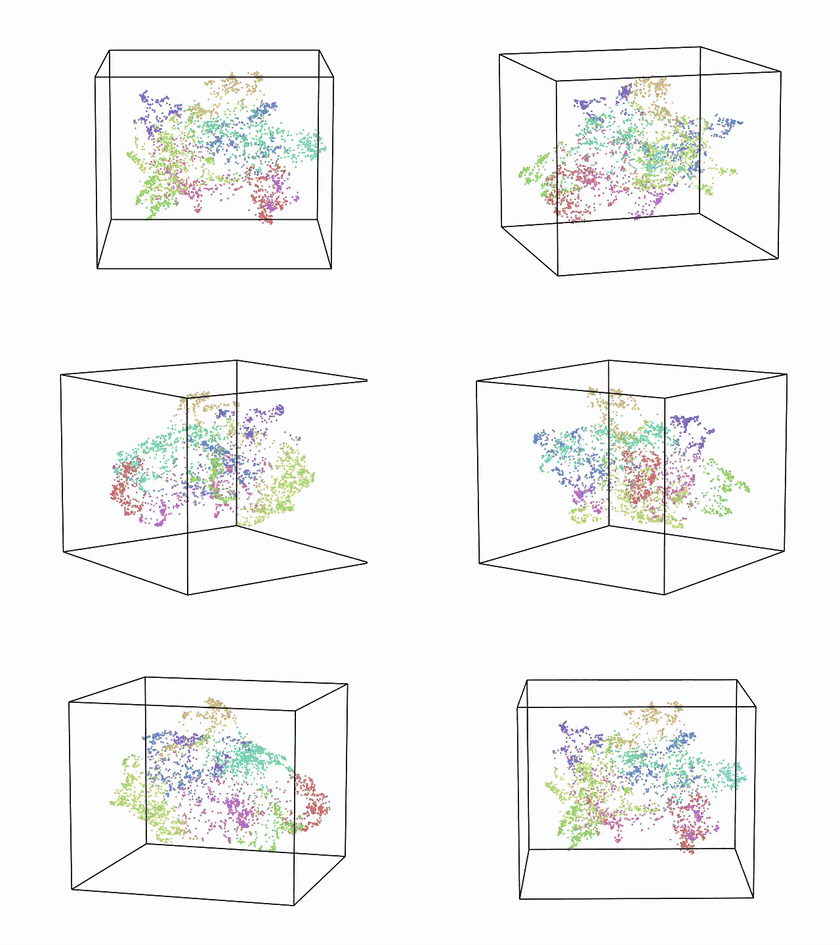
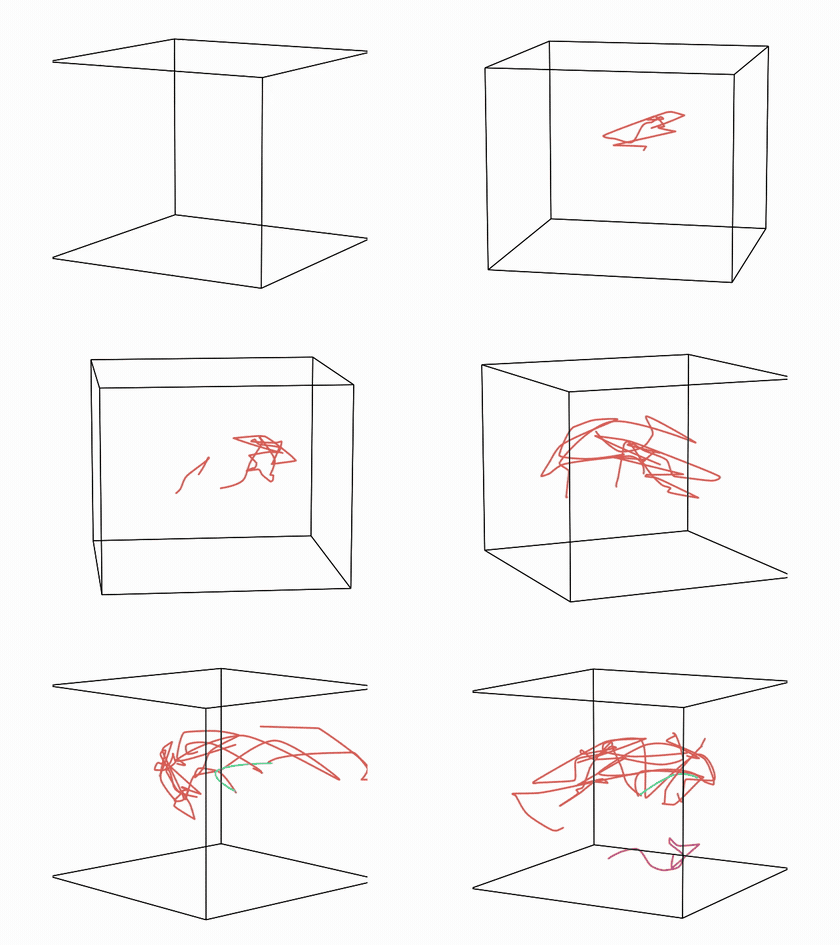
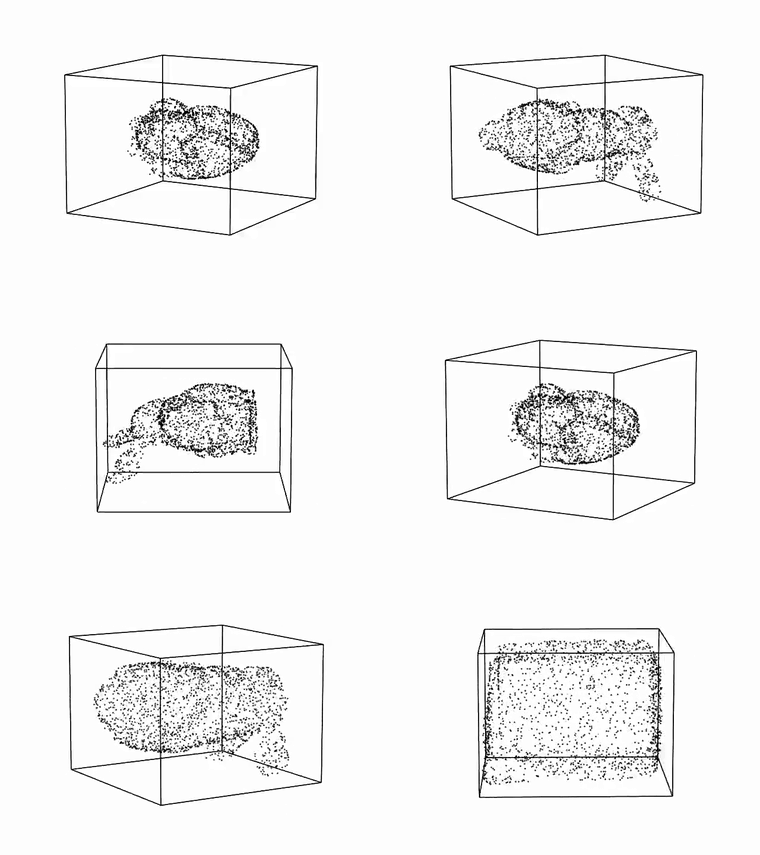
Round-4.5: the weights animation is solved, plus the requested animation & API fixes ✅The story-trajectories mystery — full diagnosisThe classic readthedocs animation could not be reproduced by any Two things still had to be fixed/understood to make that work on modern dependencies:
The animation is the classic sliding-window style (
Along the way, repeated hyperalignment got a real fix too: procrustes' optimal scaling is < 1 under noise, so repeated passes shrank the data geometrically (eventually crashing). Per-pass rescaling keeps norms stable through Single-call soft clustering (requested syntax)geo = hyp.plot(embeddings, '.', markersize=2, reduce='UMAP',
cluster={'model': GaussianMixture, 'n_clusters': 10})works verbatim: the cluster dict accepts top-level
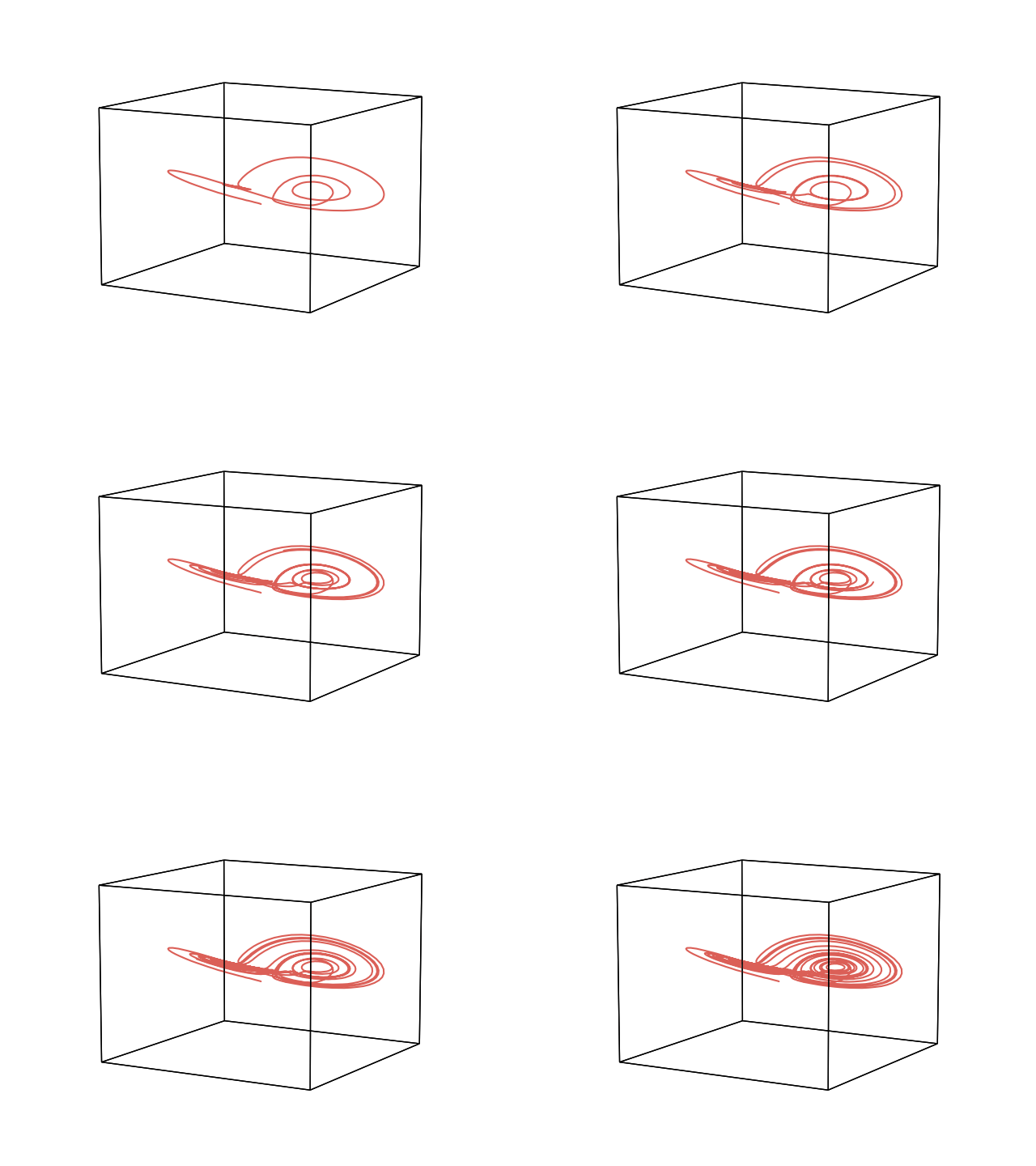
Conversation demo on the new
|
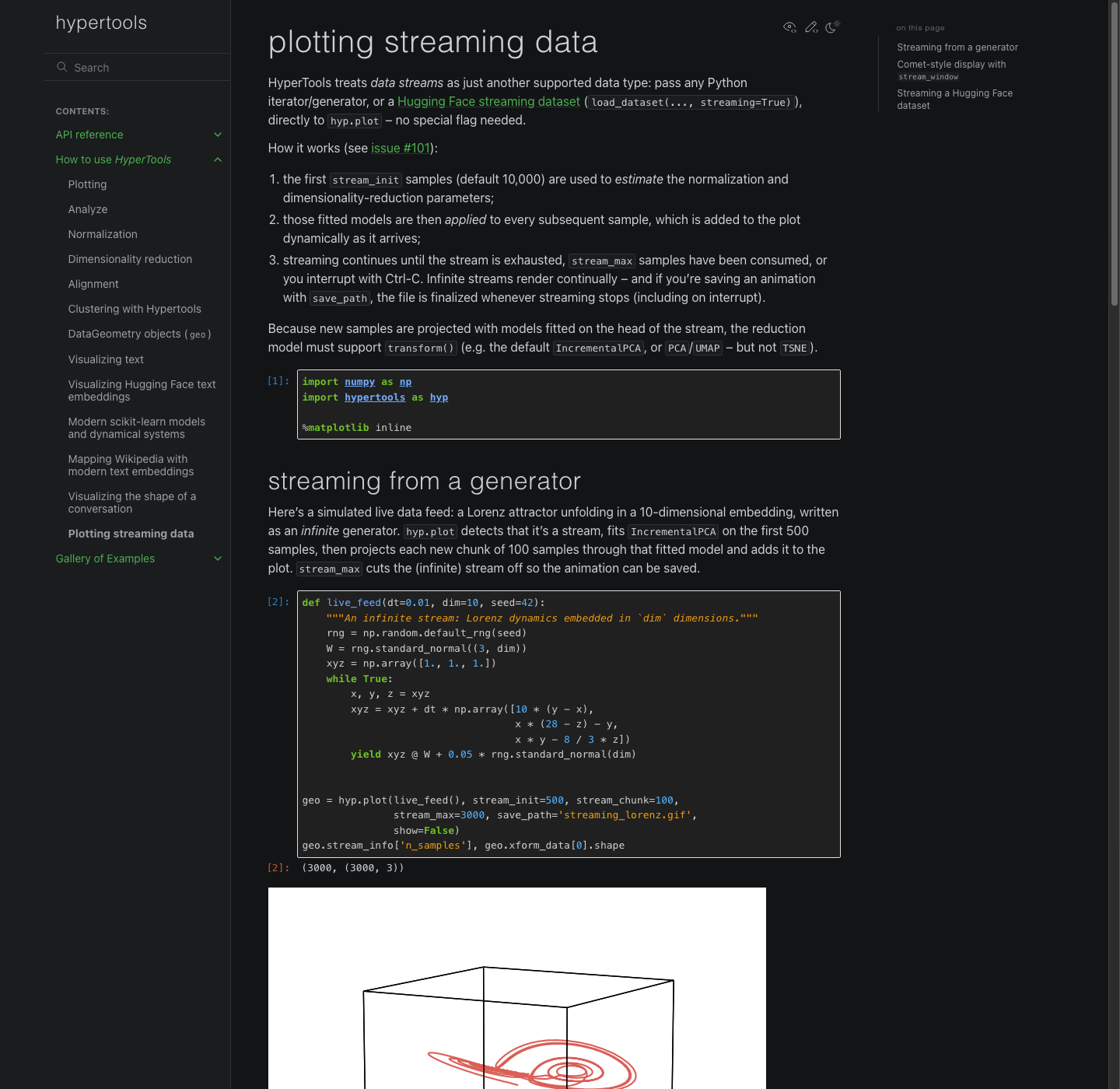
Round 5: streaming data (#101), streaming tutorial, and the ContextLab docs theme ✅Streaming data — closes the oldest open feature request (#101, 2017)Streams are now a first-class data type, exactly as specified in the issue thread: no streaming flag — from datasets import load_dataset
ds = load_dataset('scikit-learn/iris', split='train', streaming=True)
geo = hyp.plot(ds, '.') # streams straight in, nothing materializedSemantics (matching the issue design + review guidance):
Guardrails: reduction models must support 14 real tests ( New executed tutorial (docs/tutorials/streaming_data.ipynb) with two streamed animations:
Docs theme: Furo with the ContextLab lookPorted from ContextLab/scheduler per review: stock Furo plus the lab's brand — Nunito Sans, lowercase 300-weight headings with 0.6 px letter-spacing, green
220 tests passing (213 fast set + 7 animation-export) · streaming tutorial executed with 0 errors · docs build clean. 🤖 Generated with Claude Code |
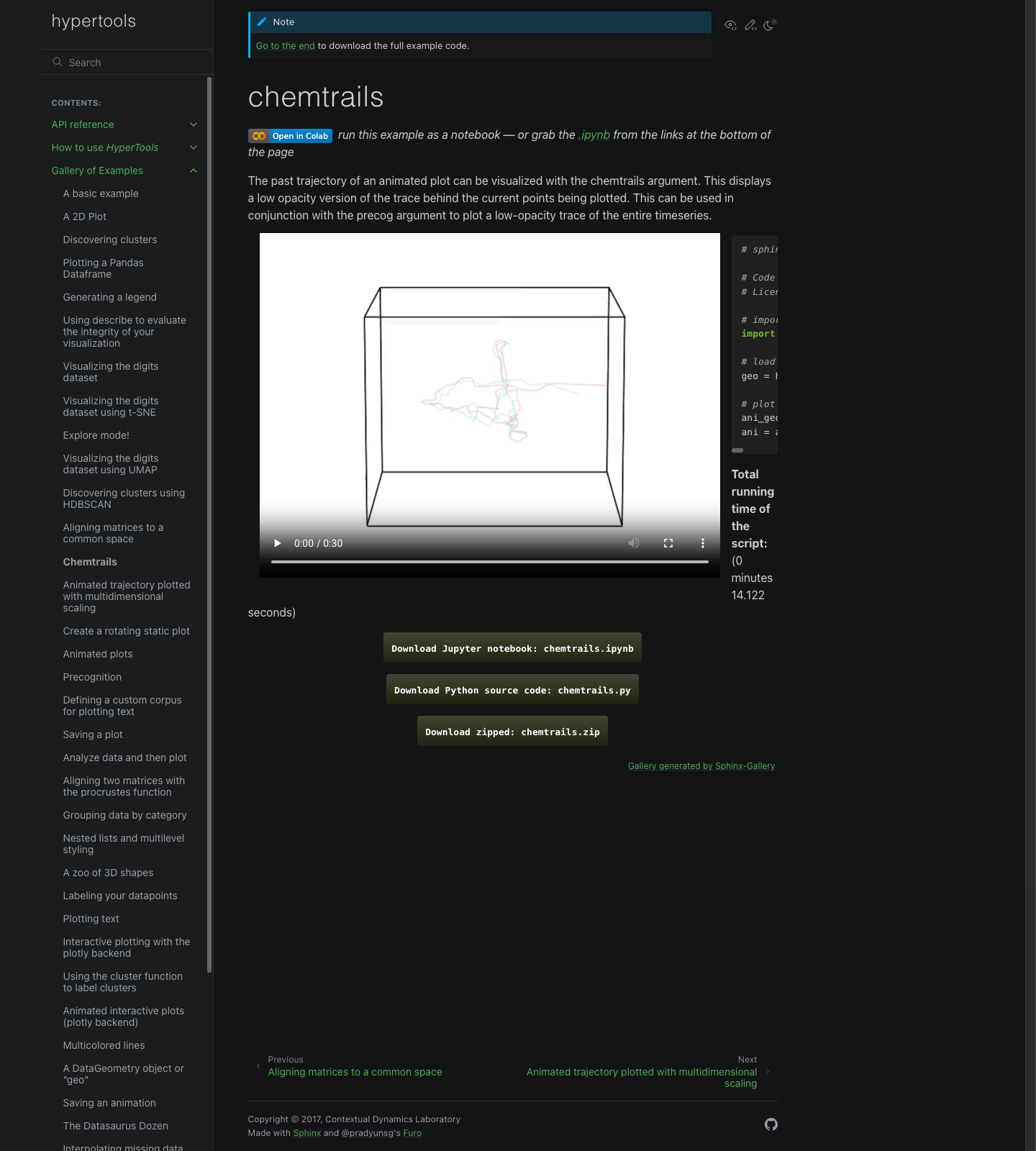
Gallery: sphinx-gallery previously executed only plot_*-named examples,
leaving chemtrails/animate*/precog/explore/save_*/analyze pages with
code but no rendered output. All examples now execute
(filename_pattern), matplotlib animations render as embedded mp4 video
(matplotlib_animations + sphinxcontrib-video; animation examples expose
`ani = ani_geo.line_ani` for the scraper), save_* examples write to
temp files, and every example page gets a branch-aware "Open in Colab"
badge + .ipynb link (post_build.py) so gallery examples open as
runnable notebooks.

Dual-backend audit (scripts/audit_gallery_backends.py): every example
runs under BOTH matplotlib and plotly in subprocesses; 78/78 pass
(save_movie under plotly needs a long timeout -- kaleido per-frame mp4
export). The audit caught a real, years-latent bug: per-dataset fmt
lists (['-','--']) routed each dataset through interp_array_list
(plural), silently replacing 2D arrays with lists of per-row
interpolations; latent because is_line() always returned False before
its round-2 fix. Fixed with interp_array + regression test.

Plotly parity for animation extras: chemtrails/precog/bullettime draw
low-opacity trail traces on window animations, tail_duration sets the
window length, and zoom moves the camera (r = 1.95*(9-zoom)/8,
mirroring the matplotlib zoom semantics); previously none of these were
forwarded to the plotly renderer. explore maps to plotly's native
hover.

Universal loader: hyp.load (and DataGeometry.plot/transform) resolve
strings by trying, in order: built-in dataset name -> local file
(npy/npz/csv/tsv/txt/json/parquet/mat/pickle) -> Hugging Face dataset
(split=/streaming=; streaming feeds straight into hyp.plot) -> Google
Drive URL or bare id -> Dropbox URL or shared-link path -> any URL with
or without https://. Lists of strings return lists of datasets. Raw
text (whitespace) still flows to the text-embedding pipeline. Also
fixes df2mat for pandas>=2 (get_dummies bool dtype made mixed
DataFrames produce object arrays that crashed np.isnan).

19 new tests (12 loader incl. real HF/Drive/Dropbox/URL fetches, 6
plotly trails, 1 interp regression); 232 passing.

Co-Authored-By: Claude Opus 4.8 <noreply@anthropic.com>
Two-layer fix for example pages showing code but no output:

1. nbsphinx was claiming the gallery pages: sphinx-gallery writes a
   downloadable .ipynb next to each generated .rst, and nbsphinx
   rendered the UNEXECUTED notebook instead of the gallery page.
   auto_examples/*.ipynb is now excluded from the document build
   (downloads still work).
2. matplotlib animations render as embedded HTML5 video: the
   sphinxcontrib.video extension is registered (required by
   matplotlib_animations=(True, 'mp4')) and all animation example
   pages (chemtrails, precog, animate*, save_movie) now embed a
   playable 30s mp4, verified visually.

Includes the regenerated gallery artifacts (all 39 examples executed,
9m39s total build execution).

Co-Authored-By: Claude Opus 4.8 <noreply@anthropic.com>
…report

Co-Authored-By: Claude Opus 4.8 <noreply@anthropic.com>
Co-Authored-By: Claude Opus 4.8 <noreply@anthropic.com>
…round 6.5)

NEW ANIMATION STANDARD (both backends): frame_rate=30, duration=30s,
rotations=1 -- one revolution every 30 seconds. Three layers had to
change for plotly to actually match matplotlib's pacing:
- library defaults (frame_rate 50->30, rotations 2->1) and the plotly
  frame math: n_frames = frame_rate * duration exactly like matplotlib
  (600-frame cap removed); parity test asserts identical 900 frames at
  ~33ms on both backends
- DataGeometry.plot no longer replays animation-pacing kwargs baked
  into saved .geo files (old-era defaults like frame_rate=50 and
  rotations=2 silently overrode the current standard in every gallery
  example that calls geo.plot); explicit caller overrides still win
- docs builds: plotly's sphinx-gallery renderer serialized every
  animation frame through kaleido for one static png (a 900-frame
  figure took ~an hour); the show path now writes a frame-stripped png
  plus an interactive html with embedded frames capped at 150, each
  shown proportionally longer -- total duration and rotation speed
  unchanged, pages ~0.1MB

Streaming stability: the data->box transform is FROZEN from the head
(the center+scale affine is captured once); every future sample goes
through the same transform and out-of-range samples are clamped to the
closest point on the box surface. Axis limits never change once set --
no more per-chunk rescale "twitch" (verified: zero vanishing ink
across tutorial animation frames + exact-position regression tests).

Legends (both backends): rendered to the RIGHT of the plot, vertically
centered on the box (mpl bbox_to_anchor; plotly x=1.02/y=0.5 with a
reserved right margin). Screenshot-verified in 2D and 3D.

Gallery UX: thumbnail clicks were dead (sphinx-gallery >= 0.17 no
longer wraps the thumb <img> in an anchor; the old gallery-fixes.js
targeted extinct .xref markup) -- thumbnails now open the example's
notebook on Colab while title text opens the example page. Animated
thumbnails were squashed into 200x200 squares from 4:3 sources; all 7
regenerated letterboxed at the correct aspect from the new 30fps mp4s
(scripts/generate_gallery_thumbs.py). Plotly evidence gifs re-rendered
at the pacing standard. DataGeometry.plot/transform docstrings document
the universal string-loading behavior for the API pages.

237 tests passing.

Co-Authored-By: Claude Opus 4.8 <noreply@anthropic.com>
Co-Authored-By: Claude Opus 4.8 <noreply@anthropic.com>
A kaleido subprocess wedged during test_animated_svg_plotly on one
Windows runner and burned the full 6-hour Actions job timeout. No test
legitimately takes over 20 minutes; a hung native call now fails fast
with a stack dump instead of holding a runner hostage (thread method,
since the hangs are inside native calls).

Co-Authored-By: Claude Opus 4.8 <noreply@anthropic.com>
Round 6: gallery pages render everything, dual-backend audit, notebooks-on-click, universal loader ✅Gallery pages now display their outputs (including animations)
The chemtrails page with its playable 30s animation (screenshot):
Clicking a gallery example gets you a runnable notebookEvery example page opens with an Open in Colab badge (branch-aware link to the example's committed notebook) next to the Every example verified on BOTH backendsNew audit harness (
Universal loader (
|
Round 6.5: animation pacing standard, streaming stability, legends, gallery UX ✅One animation standard, both backends: 30 fps · 30 s · 1 rotation per 30 s"Plotly is much too fast" had three stacked causes, each now fixed and regression-tested:
All gallery animation mp4s re-rendered at the standard (verified 900 frames @ 30 fps via ffprobe), and the plotly evidence gifs re-exported at correct pacing. Streaming: view is rock-stable, out-of-range samples clamp to the boxThe data→box transform is frozen from the initial samples (the center+scale affine is captured once); every future sample passes through that exact transform, and anything outside the box is clamped to the closest point on its surface. Axis limits never change once set. Verified: zero vanishing ink across the re-rendered tutorial animation (previously drawn pixels never move), plus regression tests for exact drawn-position stability and box-surface clamping:
Legends: right of the plot, vertically centered (both backends)matplotlib | plotly:
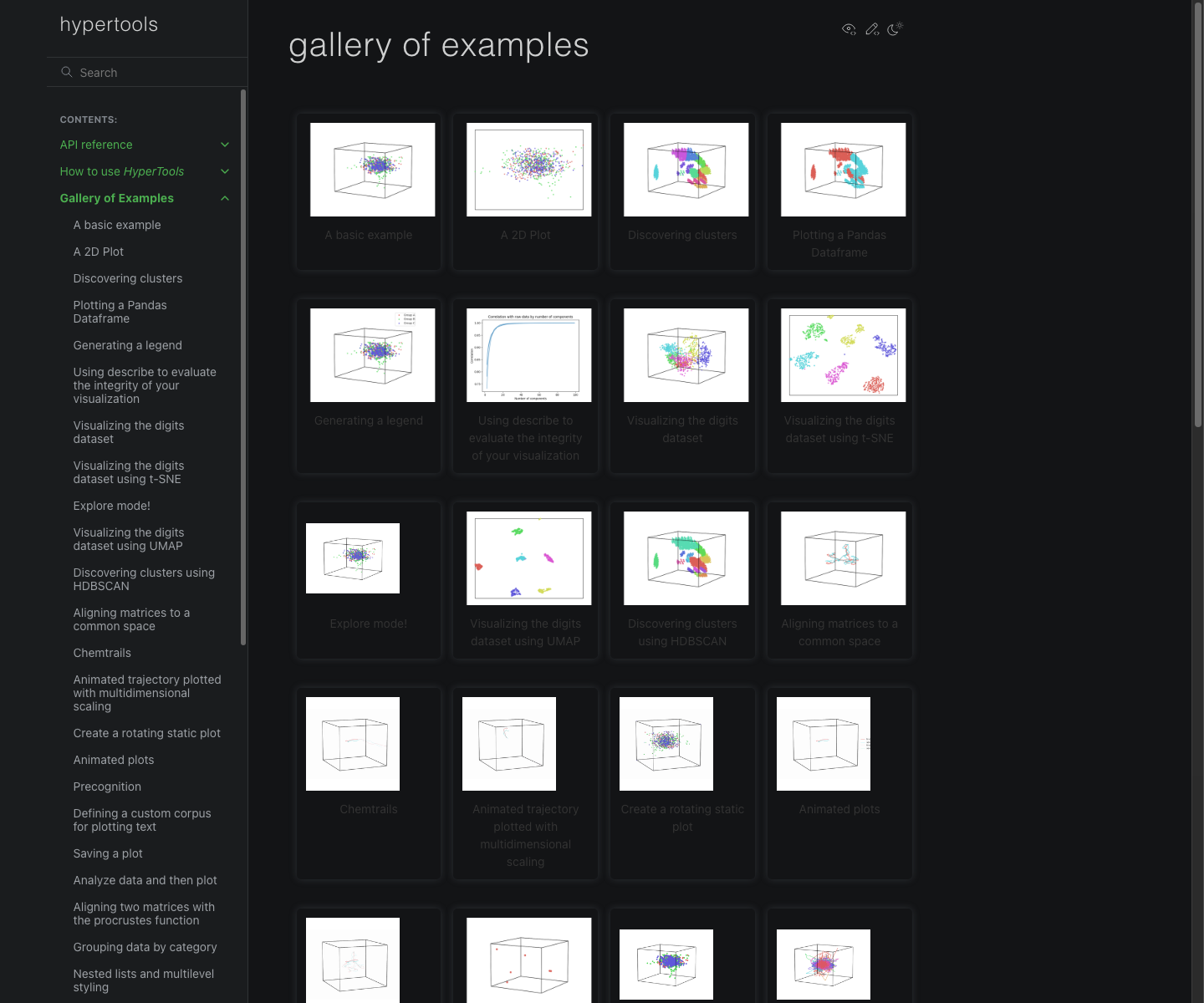
Gallery: thumbnails click through to notebooks, correct aspectThumbnail clicks were genuinely dead (sphinx-gallery ≥ 0.17 no longer wraps the image in a link, and the old fix-up JS targeted markup that no longer exists). Thumbnails now open the example's notebook on Colab; the title text under each thumbnail opens the example page with the rendered output. The animated thumbnails were also being squashed into squares from 4:3 sources — all seven are regenerated letterboxed at the correct aspect from the new 30 fps videos:
API docs
(CI hardening: a kaleido subprocess wedged for 6 hours on one Windows runner before hitting the Actions timeout -- 237 tests passing · gallery animations verified at 900 frames / 30 fps · streaming tutorial re-executed with 0 errors. 🤖 Generated with Claude Code |
Every documentation notebook (39 gallery + 13 tutorials) now opens with a
branch-aware install cell so it runs standalone in Google Colab. On a
preview branch it installs that branch from GitHub
(`%pip install "hypertools[interactive] @ git+...@dev-2.0"`, verified in a
clean venv: imports as 2.0.0.dev0 with 2.0-only features working); on
master it installs the released package. scripts/add_colab_install_cell.py
injects the line idempotently into the hand-authored tutorial notebooks,
and conf.py's first_notebook_cell emits the same line for gallery
notebooks on rebuild.

Gallery examples:
- shapes zoo: plots EVERY zoo shape (bunny, cube, dragon, sphere, teapot,
  vase, biplane) as small black dots (',' pixel marker), one panel each
- datasaurus: plots ALL THIRTEEN datasets of the dozen as small black
  dots ('.' point marker), one panel each

Co-Authored-By: Claude Opus 4.8 <noreply@anthropic.com>
Co-Authored-By: Claude Opus 4.8 <noreply@anthropic.com>
1 participant

HyperTools 2.0: modernized toolbox with interactive backend, soft clustering, and comprehensive visual verification
This PR modernizes hypertools end-to-end while preserving the public API, integrating the best ideas from the earlier refactor attempt (jeremymanning/hypertools
devbranch + backend experiments) into the current, tested codebase. Full design rationale:notes/hypertools_2.0_roadmap.md.Highlights
Interactive plotly backend with visual parity (
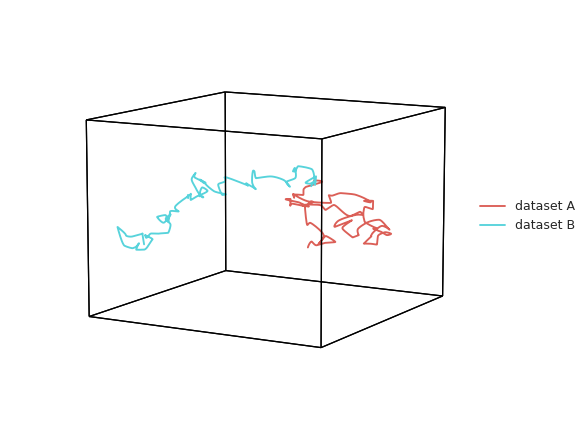
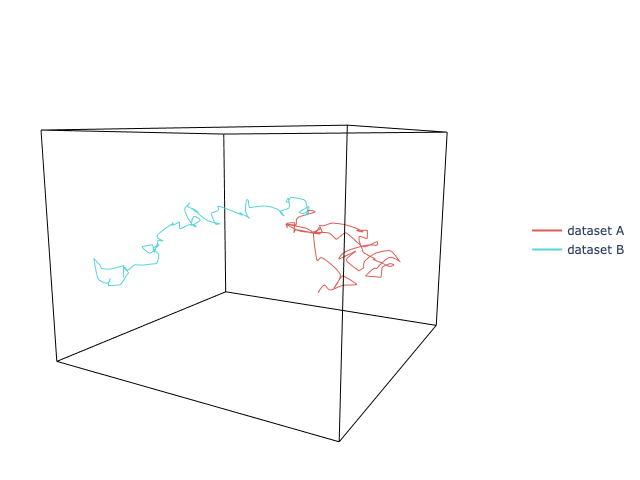
backend='auto' | 'matplotlib' | 'plotly')backend='auto'(the default) switches to plotly only on Google Colab and Kaggle. Existing local/CI workflows see zero change.docs/images/v2.0-parity/— matplotlib left, plotly right, same call.Mixture-model ("soft") clustering + robust coloring
hyp.cluster(x, cluster='GaussianMixture' | 'BayesianGaussianMixture' | 'LatentDirichletAllocation' | 'NMF')returns(n_samples, n_components)membership proportions (rows sum to 1). Hard clustering unchanged.hyp.plot(x, cluster='GaussianMixture', ...)colors observations by proportion-weighted blends of component colors.hueaccepts categorical labels, continuous values, or any 2D matrix via the newmat2colors.Multicolored lines
hue+ a line format string colors each trajectory continuously along its length on both backends (matplotlibLine3DCollection/LineCollection; plotly per-point line colors in 3D, segment traces in 2D).Nested-list input with multilevel styling
hyp.plot([[a, b], [c]])colors datasets by outermost group; deeper nesting renders thinner + fainter. Text corpora keep existing behavior.hyp.apply_model: the stack/unstack coremode='auto'|fit_transform|fit_predict|predict_proba,return_model=Truefor held-out reuse,stack=Falsefor per-dataset fits. Explicit whitelist registry (noeval).Retired legacy arguments (long-deprecated)
plot(group=...)→hue;plot(model=/model_params=)→reduce;reduce(model=/model_params=/normalize=/align=);align(method=/normalize=/ndims=)and the ambiguousalign=True(now a clear ValueError with a migration hint);cluster(ndims=). Saved geos from hypertools 0.x still load — retired kwargs are translated (group→hue) or dropped with a warning on replay.Bug fixes
str()-keys truncated numpy arrays so new data collided with stale entries. Cache removed; regression test reproduces the reported loop scenario.animate=Trueunder numpy≥2 — regression test reproduces the exact array from the issue report; also fixed the Colab/ipympl backend crash (matplotlib ≥3.9 raisesValueError, notImportError, for brokenmodule://backends) and a broken-Tcl/Tk fallback.is_line()bug:''inLine2D.markersmade it return False for every format string, silently disabling hypertools' smooth line interpolation on modern matplotlib. Fixed (with linestyle-aware parsing), restoring the intended rendering; per-point labels are now re-mapped onto interpolated trajectories.format_data/PPCA pass per plot.Performance, packaging, docs
import hypertools: 5.1s → 1.4s (lazy umap/seaborn/scipy.interpolate).pyproject.toml(2.0.0.dev0, Python 3.10–3.13);setup.py/requirements.txt/MANIFEST.in/.travis.ymlremoved; extras[interactive],[dev]; CI matrix 3 OS × py3.10–3.13 with bumped actions + screenshot artifacts; readthedocs on py3.11; externalhdbscan→ sklearn's built-in; unmaintainedpca-magicdropped.apply_modeladded to the API reference; docstrings updated for all changed signatures.Evidence: every function verified on both backends
plot,reduce,align,normalize,cluster,analyze,describe,format_data,load,apply_model, text input) across use cases on both backends: line/marker/dash styles, hue variants, clustering (hard + mixture), nested lists, multicolored lines, missing data, animations. Regenerate:python scripts/generate_verification_screenshots.py.python scripts/generate_parity_screenshots.py.dev/hypertools_2.0_dev_executed.ipynb.Sample parity montages (matplotlib | plotly — same call)
Breaking changes
TypeError/ValueErrorwith migration hints (old saved geos are translated on replay).🤖 Generated with Claude Code